The OPOL Method: How One Parent, One Language Really Works
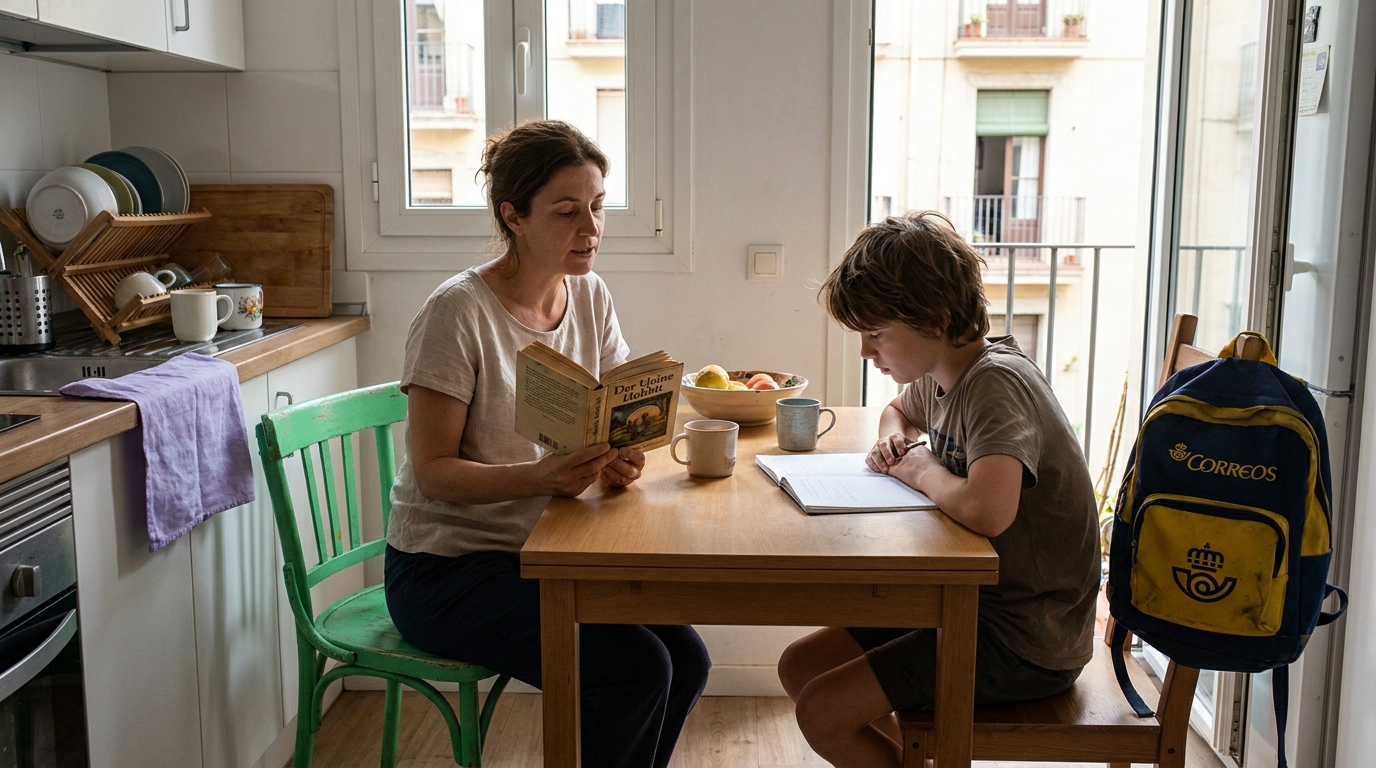
The OPOL method — One Parent, One Language — means that each parent speaks exclusively their own native language with the child, every day, without switching. That single rule, applied consistently, is enough for children to acquire two languages naturally, the same way they learn their first one: through real conversation, not lessons.
What exactly is the OPOL method?
OPOL stands for "One Parent, One Language." The principle is simple: if you want your child to grow up speaking more than one language naturally, each person in the household commits to using only one language with the child — and never swaps. The child's brain does the rest. Children are extraordinarily good at separating languages when the source is consistent. They learn very quickly that German comes from Mum and Spanish comes from Dad, and they keep those systems separate without any conscious effort.
Does OPOL work if parents speak different languages from each other?
This is actually the most common setup, and it works very well. Imagine I'm German and my husband is Spanish. I speak German with our children — always. He speaks Spanish with them — always. If we as parents need a shared language to communicate with each other, we might use English at home, which means the children pick up a third language almost as a side effect. Families like this are far more common than people think, and children in these homes regularly manage three languages with ease. The key is not which languages are involved — it's that each person holds their language firmly.
What if my child refuses to answer me in my language?
This is the moment most parents give up — and it is the exact moment not to. In the early stages, almost every child defaults to their dominant language, usually the one they use at school or with friends. Your child might answer you in Spanish even though you've been speaking German to them for months. That is completely normal. It does not mean the method is failing. It means the child is still building confidence in that language. I've noticed, both with my own children and with the families I work with, that the passive understanding always develops first. Children absorb far more than they produce. Keep speaking your language. The answers will come.
How consistent do I really need to be?
Very consistent — but that doesn't mean perfect. Life happens: you're at the doctor, you're embarrassed to speak German in a crowded Spanish waiting room, you're exhausted and you just switch. Those moments won't undo years of consistent input. What does cause problems is a gradual, permanent slide toward the dominant language because it feels easier. The goal is to make your native language the default in every relaxed, everyday moment: mealtimes, bedtime, car journeys, cooking together. Those are the hours that add up.
Can the OPOL method work with three languages?
Yes, and it's more common than it sounds. A German mother, a Spanish father, and an English-medium school is a setup I see regularly in international cities across Spain. Each parent holds their own language, the school provides the third, and the family might use one language as a bridge when everyone is together. Children in this situation do not get confused — they get context-sensitive. They learn that language choice is social and situational, which is actually a sophisticated linguistic skill. I've never seen a child's development harmed by three languages when the structure is clear.
What is the single biggest mistake parents make with OPOL?
Stopping too soon. Parents try OPOL for a few weeks, don't hear the child respond in the target language, and conclude it isn't working. But language acquisition at this level is slow and invisible for a long time. The input is accumulating even when there is no visible output. The families I've seen succeed long-term are not the ones with a perfect system — they're the ones who kept going when it felt pointless. Discipline, in this context, doesn't mean being strict with your child. It means being consistent with yourself.
How do I start OPOL if my child is already 8 or 9?
Start today, and don't apologise for the change. You don't need to make a big announcement. Simply begin speaking your language, and if your child looks confused or protests, explain it naturally: "I want us to speak German together because it's important to me and I want you to have it." Older children — especially those between 8 and 12 — are surprisingly capable of adapting once they understand there's a reason. They may resist for a few weeks, but they adjust. Starting at 8 is not starting too late. Starting at 8 and giving up at 9 is the only version that doesn't work.
The OPOL method is not complicated. It asks for one thing: that you keep showing up in your language, even when your child answers in another one. That constancy — your voice, your words, your stories in your native tongue — is what builds a bilingual child. Not a special curriculum. Not an app. Not the perfect age. Just you, speaking your language, day after day.