Raising Bilingual Kids Across Three Countries: The One System That Survived Every Move
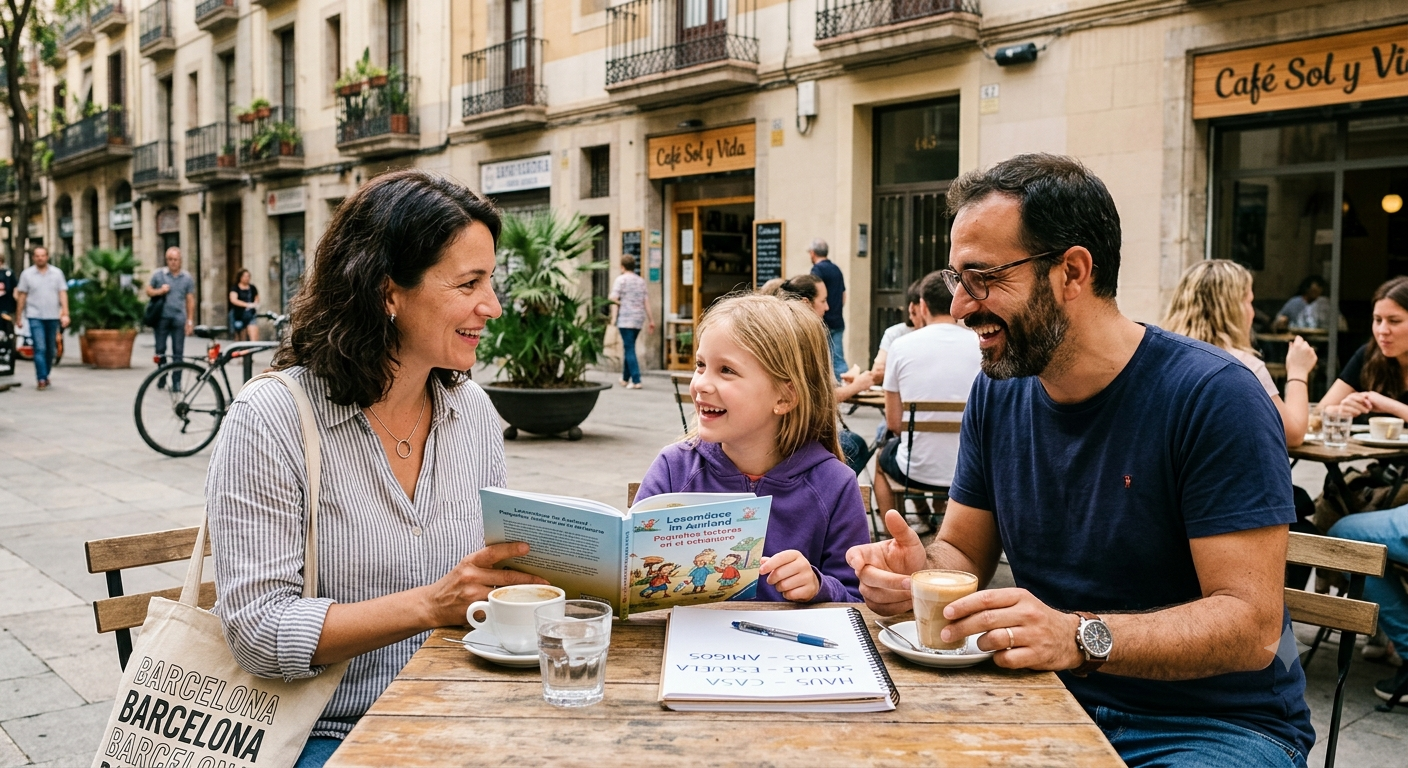
The single most effective system for raising bilingual kids across multiple countries is a person-anchored, routine-based language schedule that moves with your family regardless of which country you are living in. Geography reshapes everything around your child — the school, the friends, the street signs — but a deliberate daily language ritual stays constant because you carry it.
Why every relocation threatens the minority language
Each time a family crosses a border, the dominant community language floods in fast. New school, new playground, new cartoons — all in the local language. Research consistently shows that minority-language input drops sharply within the first six months of a move, often before parents even notice. For expat and third-culture families, this cycle can repeat two, three, or four times before a child turns ten.
- School immersion can displace home-language use within weeks.
- Children naturally mirror the language of their closest peers.
- Parents, exhausted by relocation logistics, often let routines slip first.
What actually survived three moves: the Talky Daily Ritual
Families who successfully maintain two or more languages across relocations share one habit: a short, predictable, daily language moment that does not depend on living in a particular country. Think bedtime stories in the heritage language, a ten-minute morning vocabulary game, or a weekly video call ritual with grandparents conducted entirely in Language B.
"We changed cities three times in five years. The one thing that never changed was our Spanish story-time after dinner. That half-hour became my daughter's anchor." — Talky parent, currently based in Singapore
The ritual works because it separates language from location. The language is tied to you, to a specific time, and to an emotional experience — not to a country your child may never live in again.
How to build a portable language routine in three steps
- Choose one daily slot. Bedtime, breakfast, and the school-run are the most resilient. Pick whichever survives travel and time-zone changes best for your family.
- Assign one language to that slot permanently. Consistency matters more than duration. Twenty minutes every day outperforms two hours on weekends.
- Use a structured tool that travels with you. Apps like Talky provide ready-made, age-appropriate activities so you are never starting from scratch after a move — the content is already there, waiting.
Frequently Asked Questions
What if my child refuses to speak the minority language after a move?
Refusal is normal and almost always temporary. Keep the ritual low-pressure and playful. Passive exposure — listening to stories, watching short videos — maintains neural pathways even when active speaking stops. Within a few weeks of consistent gentle exposure, most children re-engage.
How many languages can a young child realistically maintain across countries?
Most developmental linguists consider two languages fully maintainable with deliberate effort, and three achievable when one language has strong community support (e.g., the school language). Beyond three, children can retain receptive understanding of additional languages even if active fluency fades temporarily.
Does the system work if both parents speak different languages?
Yes — and it often works better. The one-parent-one-language (OPOL) approach maps naturally onto a routine-based system. Each parent owns specific time slots, which creates predictable, emotionally consistent language environments for the child.
Key Takeaways
- Tie language exposure to people and rituals, not to geography.
- A short daily routine beats long, irregular sessions every time.
- Refusal after a move is temporary — gentle consistency is the answer.
- Portable tools remove the planning burden so the routine actually happens.
- Your family's language system should be able to fit in a carry-on.